AI-Powered Time Tracking - How Screen Recording Changes Everything
Discover how AI-analyzed screen recording transforms employee monitoring from surveillance into actionable intelligence that drives real productivity improvements.
AI-Powered Time Tracking: How Screen Recording Changes Everything
Traditional time tracking asks one question: "How many hours did you work?" AI-powered screen recording asks better questions: "How effectively did you work? What patterns indicate success? Where are the hidden productivity killers?"
The Evolution of Employee Monitoring
Generation 1: Manual Time Sheets
- Employees self-report hours
- Prone to inaccuracy and gaming
- Compliance-focused
- No actionable insights
Generation 2: Screenshot Monitoring
- Random screenshots every 5-10 minutes
- Easy to game with "productive" screens on display
- Context gaps between captures
- Still just counting time
Generation 3: AI-Analyzed Screen Recording (Today)
- Continuous recording with intelligent AI analysis
- Pattern recognition across work activities
- Anomaly detection for risks and opportunities
- Focus on outcomes, not just inputs
How AI Screen Recording Transforms Monitoring
1. Complete Context, Not Snapshots
Traditional screenshot monitoring captures moments. AI screen recording captures the full story.
The Screenshot Problem:
- Employee opens spreadsheet before screenshot
- Returns to YouTube after capture
- System shows "productive" activity
- Reality: minimal actual work
The Screen Recording Solution:
- Continuous capture reveals actual work patterns
- AI analyzes time spent in each application
- Context switches and focus periods identified
- No gaming possible—the full picture is visible
2. Intelligent Pattern Recognition
Our AI doesn't just record—it understands. By analyzing screen activity, ScreenJournal identifies:
Work Style Analysis:
- Deep Focus Workers: Long uninterrupted blocks in work applications
- Collaborative Workers: Frequent communication tool usage, meetings
- Mixed Mode: Alternating between focus work and coordination
Productivity Cycles:
- Peak performance hours for each team member
- Energy patterns throughout the week
- Optimal meeting times that minimize disruption
- Natural break patterns for sustained focus
3. Anomaly Detection That Matters
Instead of raw data dumps, you receive actionable intelligence:
| Detection Type | What It Catches | Why It Matters |
|---|---|---|
| Idle Abuse | 3+ extended idle periods per hour | Identifies disengagement |
| Phantom Overtime | Logged hours without screen activity | Prevents timesheet fraud |
| Burnout Signals | Late nights, weekend work, declining patterns | Protects employee wellbeing |
| Context Drift | >25% time in non-work applications | Reveals focus challenges |
4. Weekly AI Reports, Not Dashboard Overload
The biggest problem with traditional monitoring? Information overload. Managers drown in dashboards instead of managing teams.
ScreenJournal's approach:
Every week, you receive a concise AI-generated report containing:
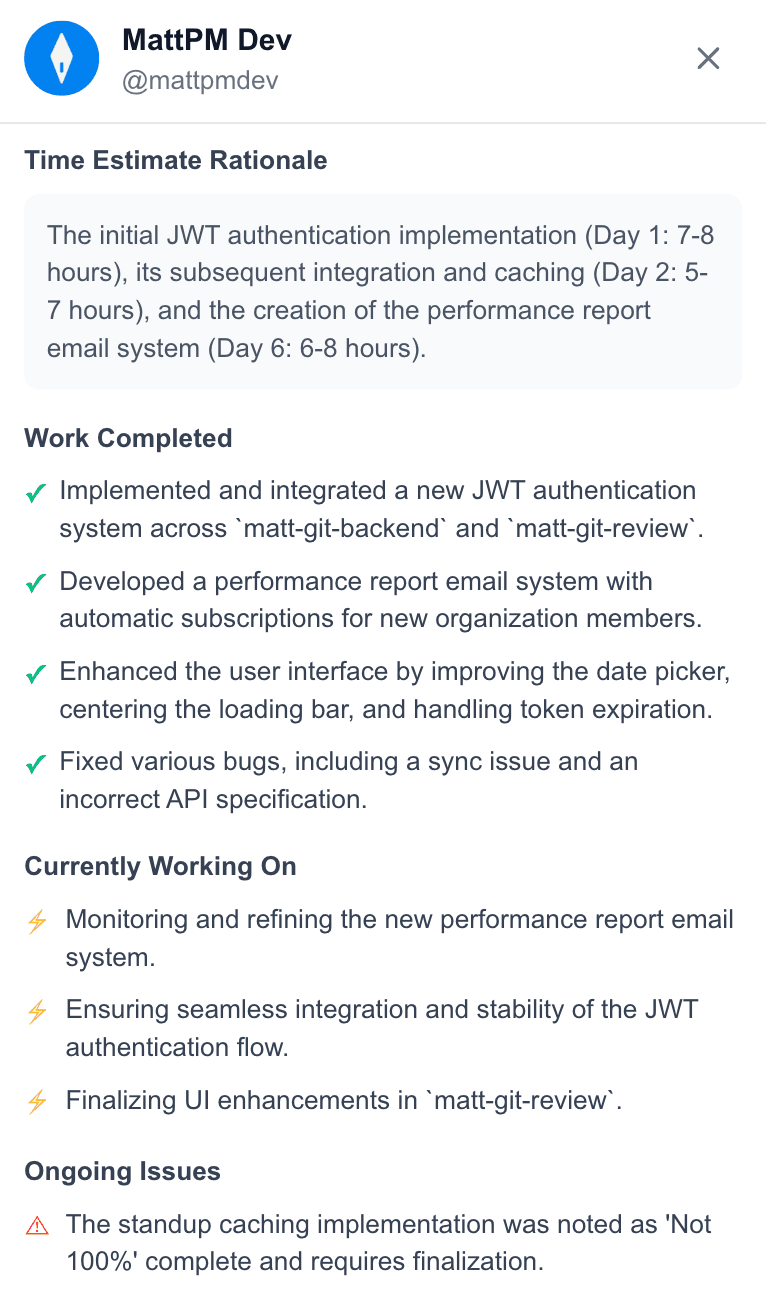
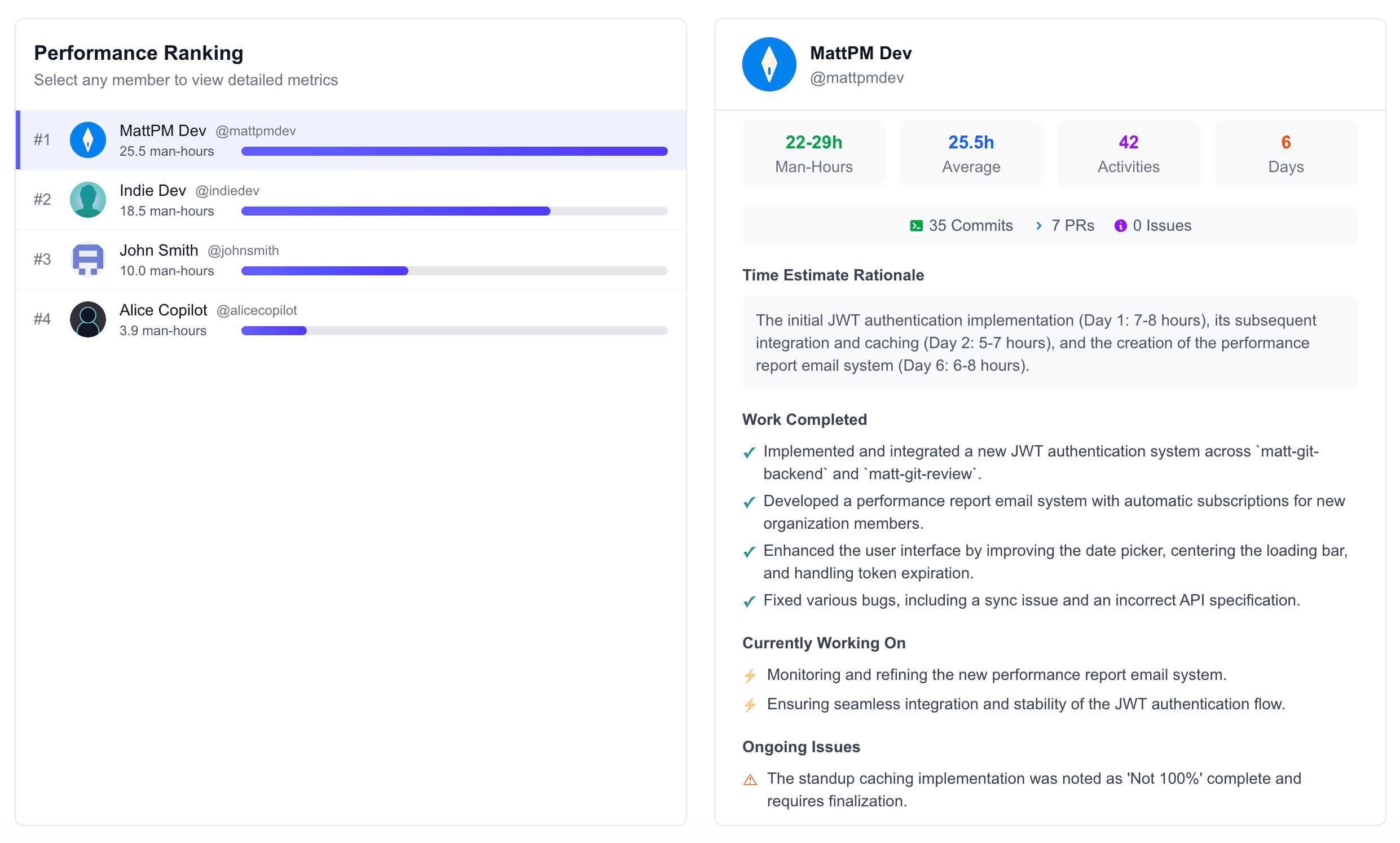
- Team Rankings: Who's performing well and why
- Risk Alerts: Early warning signs explained clearly
- Anomalies Detected: Unusual patterns worth investigating
- Actionable Recommendations: Specific next steps to improve
No daily dashboard checking. No manual data interpretation. Just intelligence delivered to your inbox.
Real-World Applications
Remote Team Management
Problem: No visibility into how remote employees actually spend their time.
ScreenJournal Solution:
- Continuous screen recording captures real work activity
- AI analyzes patterns across the full workday
- Weekly reports highlight who's thriving and who needs support
- Managers intervene early, not after problems escalate
Result: 30% faster identification of underperformance, 40% reduction in management overhead.
BPO & Call Center Operations
Problem: High employee churn, inconsistent productivity, gaming of traditional metrics.
ScreenJournal Solution:
- Screen recording reveals actual customer interaction quality
- AI identifies top performers' work patterns
- Anomaly detection catches policy violations early
- Role-normalized scoring prevents unfair comparisons
Result: 25% reduction in employee turnover, 20% improvement in quality scores.
Professional Services Teams
Problem: Difficult to understand billable hour accuracy and actual effort.
ScreenJournal Solution:
- Screen recording validates time spent on client work
- AI categorizes activities by project and client
- Effort scores correlate to deliverable quality
- Weekly insights improve resource allocation
Result: 15% improvement in billing accuracy, better project estimation.
Privacy-First AI Analysis
ScreenJournal's AI respects privacy while providing insights:
What We Analyze:
- Application usage patterns
- Focus vs. distraction time
- Work schedule adherence
- Activity intensity levels
What We DON'T Capture:
- Keystroke content (only activity counts)
- Personal message contents
- Password or financial information
- Webcam or microphone recording
Our AI processes screen recordings to extract work patterns, then provides aggregated insights. Raw footage is retained briefly for verification, then automatically purged based on your retention policy.
The Effort Score: Transparent Productivity Measurement
Every team member receives an Effort Score (0-100) based on:
- Idle Time: Reasonable breaks expected; excessive idle flagged
- Focus Ratio: Time in work applications vs. distractions
- Activity Intensity: Keyboard/mouse engagement levels
- Schedule Adherence: Presence during expected work hours
Role Normalization: A designer reviewing visual work scores differently than a developer coding. Our AI understands that "active screens" look different across roles.
Getting Started with AI Screen Recording
Week 1-2: Deployment
- Install ScreenJournal desktop app on team devices
- Configure work hours and privacy preferences
- Communicate transparently with your team
Week 3-4: Baseline Establishment
- AI learns normal patterns for your team
- Initial insights begin appearing
- First weekly report delivered
Week 5+: Full Intelligence
- Anomaly detection calibrated to your team
- Trend analysis across weeks and months
- Predictive insights for proactive management
Common Questions
"Isn't screen recording invasive?"
Screen recording with AI analysis is actually less invasive than traditional monitoring because:
- AI extracts patterns, not personal content
- Managers see insights, not raw footage
- Employees understand exactly what's measured
- Focus is on productivity, not surveillance
"What about employee trust?"
Transparency builds trust. ScreenJournal employees can:
- See their own Effort Scores
- Understand how metrics are calculated
- Access their activity summaries
- Know exactly what's being analyzed
"How is this different from other tools?"
Most tools give you dashboards to interpret yourself. ScreenJournal gives you answers—weekly AI reports that tell you who needs attention and what to do about it.
The Future of Work Requires Smarter Monitoring
Remote and hybrid work isn't going away. The question isn't whether to monitor—it's how to monitor intelligently.
AI-powered screen recording represents the next evolution: monitoring that provides genuine insights, respects privacy, and helps managers lead rather than surveil.
Ready to experience AI-powered time tracking? Register for early access to see how ScreenJournal transforms workforce intelligence for your team.
Ready to improve your employees' productivity by 200%?
Related Posts
Getting Started with ScreenJournal - AI Employee Monitoring That Works
Learn how to implement AI-powered employee monitoring that provides actionable insights through screen recording analysis and weekly AI reports.

The Goldfish Protocol - Why Our AI Forgets Your Screen Recording Instantly
Discover how ScreenJournal uses the "Goldfish Protocol" to analyze employee activity without storing invasive video. Learn about our privacy-first architecture using Gemini and InfluxDB.

Why We Built on Top of Open Source - ActivityWatch on Steroids
Learn how ScreenJournal upgrades ActivityWatch with computer vision and AI processing to transform raw window logging into semantic workforce intelligence.