Privacy-First Employee Monitoring - Building Trust While Maintaining Visibility
Explore how privacy-first employee monitoring creates better outcomes for both employers and employees through transparency, respect, and intelligent data collection.
Privacy-First Employee Monitoring: Building Trust While Maintaining Visibility
The transition to remote work created a monitoring paradox: managers feel they need more visibility, while employees fear invasive surveillance. Privacy-first monitoring resolves this paradox by providing necessary insights without crossing ethical boundaries.
The Privacy Crisis in Employee Monitoring
The Problem
Recent surveys reveal troubling trends:
- 54% of remote workers report feeling uncomfortable with monitoring
- 78% say monitoring makes them trust their employer less
- 43% have experienced invasive monitoring (constant screenshots, webcam recording)
- 62% would consider leaving a job over invasive monitoring
Yet organizations have legitimate needs:
- Verify work is being done
- Identify productivity blockers
- Allocate resources effectively
- Maintain security and compliance
What is Privacy-First Monitoring?
Privacy-first monitoring collects the minimum necessary data to achieve legitimate business goals, with maximum transparency about what's collected and why.
Core Principles
1. Minimal Data Collection
Traditional Monitoring:
- Every keystroke captured
- Full screenshot every 5 minutes
- Complete browsing history
- Email and message content
Privacy-First Monitoring:
- Keystroke and click counts only
- Randomized screenshots (5-10 per day)
- Website categories, not full URLs
- No message content, ever
2. Explicit Consent
Employees should know:
- Exactly what data is collected
- How it will be used
- Who can access it
- How long it's retained
- Their rights regarding the data
## Example: Privacy Notice

### What We Monitor
- Application usage (name and duration)
- Website categories (work, social, etc.)
- Keyboard/mouse activity levels
- 5 random screenshots per day

### What We DON'T Monitor
- Actual typed content
- Specific websites visited
- Email or message content
- Webcam or microphone

### Why We Monitor
- Identify process bottlenecks
- Balance team workload
- Detect early signs of burnout
- Improve remote work policies

### Your Rights
- View all your data
- Request data deletion
- Opt-out with manager approval
- Appeal any automated decisions
3. Purpose Limitation
Data collected for productivity monitoring cannot be repurposed for:
- Performance reviews (without explicit consent)
- Disciplinary actions (as sole evidence)
- Marketing or sales
- Third-party sales
4. Employee Access
Every employee should have:
- Real-time access to their own data
- Ability to see what their manager sees
- Understanding of how they're evaluated
- Option to contest inaccurate data
Legal Framework
GDPR Compliance (EU)
Key requirements for employee monitoring:
Lawfulness:
- Legitimate interest (productivity) exists
- Less invasive alternatives considered
- Data minimization applied
Transparency:
- Clear privacy notice
- Data processing register maintained
- Regular communication about monitoring
Individual Rights:
- Right to access data
- Right to rectification
- Right to erasure
- Right to restrict processing
CCPA Compliance (California)
Requirements include:
- Annual notice of monitoring
- Disclosure of data categories collected
- Purpose of collection explained
- Right to request data deletion
Best Practices for Compliance
- Conduct Privacy Impact Assessments before implementation
- Appoint a Data Protection Officer for monitoring oversight
- Implement Data Retention Policies (recommend 90 days)
- Provide Annual Privacy Training for managers
- Document Everything - policies, consents, assessments
Building a Privacy-First Program
Step 1: Define Legitimate Needs
Ask: "What do we need to know, not what can we know?"
Good: Average team productivity trends Bad: Individual bathroom break timing
Good: Application usage patterns Bad: Contents of every document edited
Step 2: Choose the Right Tools
Evaluation criteria:
| Feature | Privacy-First | Invasive |
|---|---|---|
| Screenshots | Randomized, blur personal | Constant, full detail |
| Keystrokes | Count only | Content captured |
| Websites | Categories only | Full URLs and content |
| Idle Time | General patterns | Second-by-second tracking |
| Data Access | Employee can view own data | Manager-only access |
Step 3: Transparent Rollout
Week 1-2: Announcement
- Explain business need
- Detail what will be monitored
- Answer questions in town halls
- Provide written documentation
Week 3-4: Testing Phase
- Pilot with volunteer team
- Gather feedback
- Make adjustments
- Document concerns and solutions
Week 5+: Full Rollout
- Start with "learning mode" (no actions taken on data)
- Regular check-ins with team
- Continuous feedback loop
- Adjust as needed
Step 4: Ongoing Management
Monthly:
- Review data collection practices
- Update team on insights gained
- Check for scope creep
- Validate consent is current
Quarterly:
- Privacy impact assessment
- Employee satisfaction survey
- Policy review and updates
- Compliance audit
Privacy-First vs. Traditional Monitoring
Case Study: Tech Startup (50 employees)
Traditional Monitoring (First 6 months):
- Constant screenshots
- Full URL logging
- Keystroke logging
- Results:
- 40% increase in employee stress
- 25% turnover (citing monitoring)
- No measurable productivity gain
- 2 GDPR complaints
Privacy-First (Next 6 months):
- Randomized screenshots (5/day)
- Category-level web tracking
- Activity counts only
- Results:
- 30% decrease in employee stress
- 5% turnover (normal range)
- 15% productivity improvement
- Zero privacy complaints
Common Objections
"We need more data to manage effectively"
Reality: More data often means more noise. Privacy-first monitoring focuses on signal over noise.
Successful management requires:
- ✅ Trend identification
- ✅ Pattern recognition
- ✅ Anomaly detection
- ❌ Minute-by-minute surveillance
"Employees will abuse privacy protections"
Reality: Trust creates accountability. When employees know:
- They're trusted
- Monitoring is reasonable
- They can see their own data
- Evaluation is fair
They perform better, not worse.
"Privacy-first tools don't provide enough control"
Reality: Privacy-first provides different control:
Traditional: Tight control over individuals Privacy-First: Better control over processes and team dynamics
Privacy-first shifts focus from "catching bad employees" to "building better systems."
The Business Case for Privacy-First
Improved Retention
Organizations with privacy-first monitoring see:
- 35% lower turnover
- 50% fewer privacy-related complaints
- 20% higher employee satisfaction scores
Better Productivity
Counterintuitively, less invasive monitoring yields:
- 15-20% productivity improvements
- Higher quality work output
- More innovative problem-solving
- Improved team collaboration
Reduced Legal Risk
Privacy-first approaches:
- Minimize GDPR/CCPA violations
- Reduce wrongful termination suits
- Lower privacy investigation costs
- Improve regulatory compliance scores
Enhanced Reputation
Organizations known for ethical monitoring:
- Attract top talent more easily
- Receive better reviews on Glassdoor
- Build stronger employer brands
- Win more privacy-conscious clients
Implementing Privacy-First Today
Quick Wins
-
Audit Current Practices
- List all data collected
- Identify unnecessary collection
- Remove invasive tools
-
Increase Transparency
- Create clear privacy notice
- Give employees data access
- Host Q&A sessions
-
Implement Safeguards
- Data retention limits (90 days)
- Access controls (need-to-know)
- Regular privacy reviews
Long-term Strategy
- Year 1: Build privacy-first foundation
- Year 2: Optimize data insights
- Year 3: Industry-leading privacy program
Conclusion
Privacy-first employee monitoring isn't about collecting less data-it's about collecting the right data. It's not about trusting blindly-it's about trusting intelligently.
Organizations that embrace privacy-first monitoring don't sacrifice visibility; they gain something more valuable: trust.
And in the age of remote work, trust might be the most important metric of all.
Want to transition to privacy-first monitoring? Contact us at privacy@mattpm.ai for a confidential consultation.
Additional Resources
Ready to improve your employees' productivity by 200%?
Related Posts
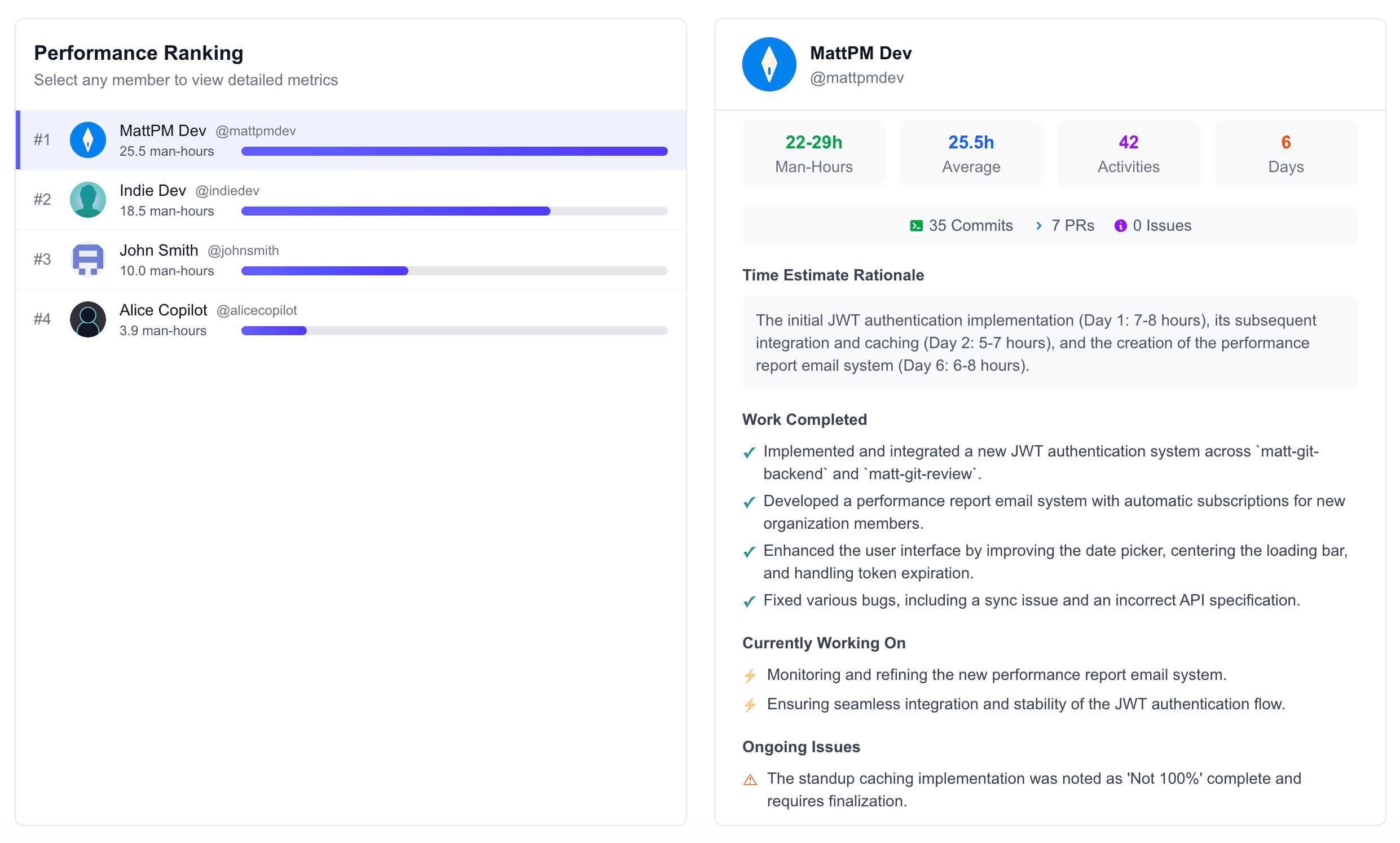
Getting Started with MattPM - Privacy-First Employee Monitoring
Learn how to implement privacy-first employee monitoring that respects your team while providing actionable insights for better remote work management.
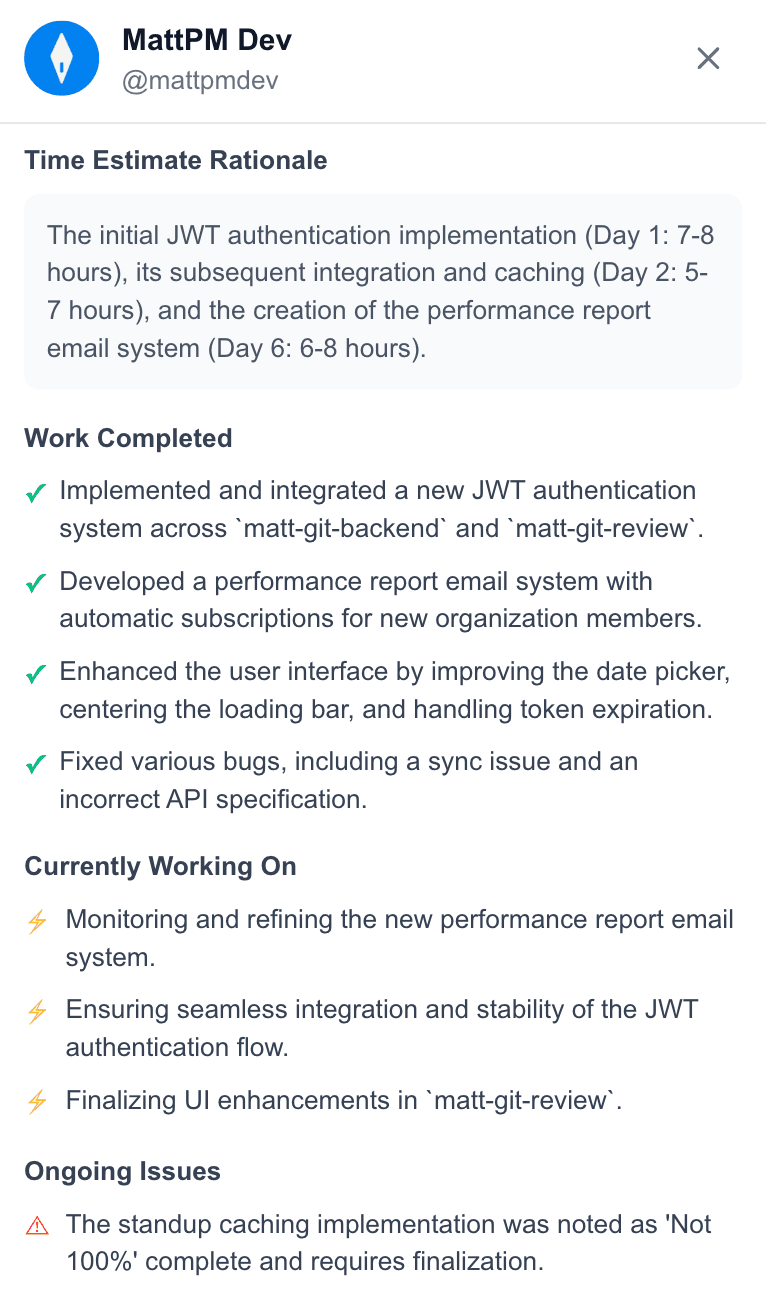
AI-Powered Time Tracking - Beyond Simple Hour Counting
Discover how artificial intelligence transforms time tracking from a compliance exercise into actionable workforce intelligence that drives better decisions.